In recent years, the mountainous areas of Quảng Trị Province have seen a clear transformation in rural economic development. From mainly self-sufficient production, cooperative groups and cooperatives have gradually developed OCOP (One Commune One Product) items aligned with market demand. Notably, changes in awareness regarding branding, market linkage, and digital transformation are opening up sustainable pathways for agricultural products in these regions.
Linking Production with Market Demand
In the past, many local specialties such as Khe Sanh coffee, A Bung brocade, bamboo shoots, and medicinal herbs—despite their quality—struggled to find stable markets. Small-scale production, lack of branding, and limited attention to packaging meant that product value did not match its potential. However, with the implementation of the OCOP program and support from relevant authorities, both local people and cooperatives have significantly changed their mindset. Products are now made not only to sell, but to deliver real value.
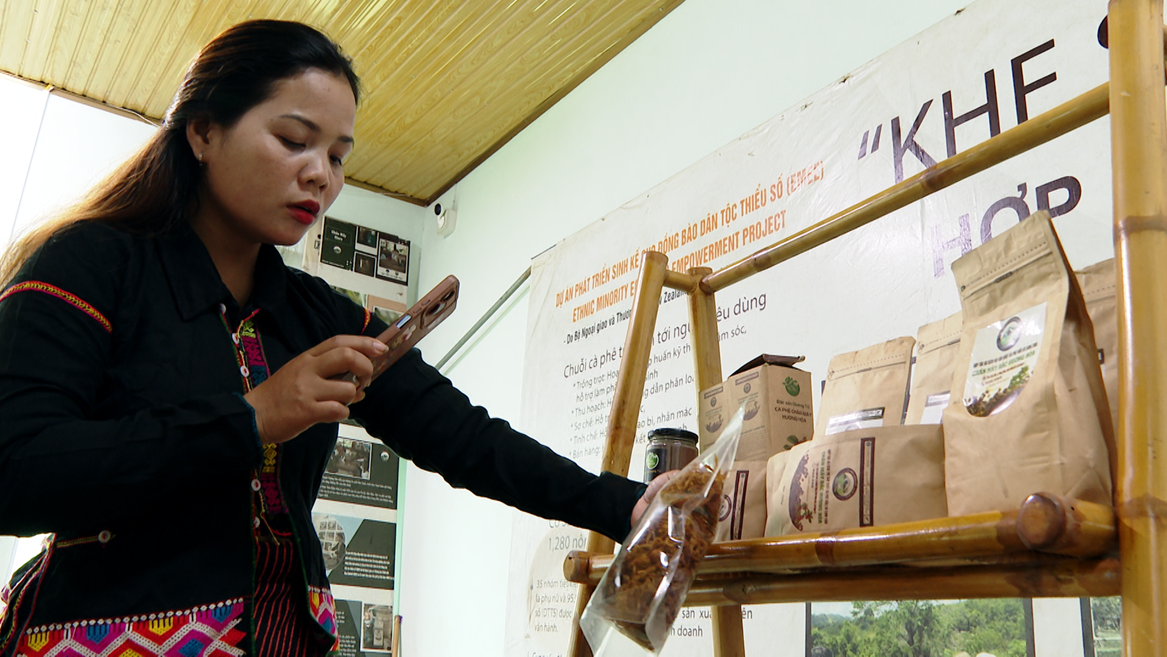
Chan May Organic Ecological Coffee Cooperative promotes its products via social media – Photo by M.H.
A notable example is Chan May Organic Ecological Coffee Cooperative in Chenh Venh Village, Huong Phung Commune. Here, young ethnic minority members are transforming how products reach the market. One typical case is Ms. Ho Thi Nuong, who boldly introduced the cooperative’s coffee products on social media platforms.
Although still new in mountainous areas, this approach has shown initial effectiveness, aligning well with the digital transformation trend. She shared: “Recently, I have participated in training courses on digital transformation, including building a cooperative website, posting on Facebook and Zalo, and livestreaming local specialty products to bring them closer to consumers.”
While Chan May Cooperative reflects the dynamism of youth, Khe Sanh Agricultural Cooperative demonstrates how quality and branding can elevate product value. Its coffee products are being systematically invested in—from production processes to packaging and labeling—and are gradually moving toward achieving the 5-star OCOP standard.
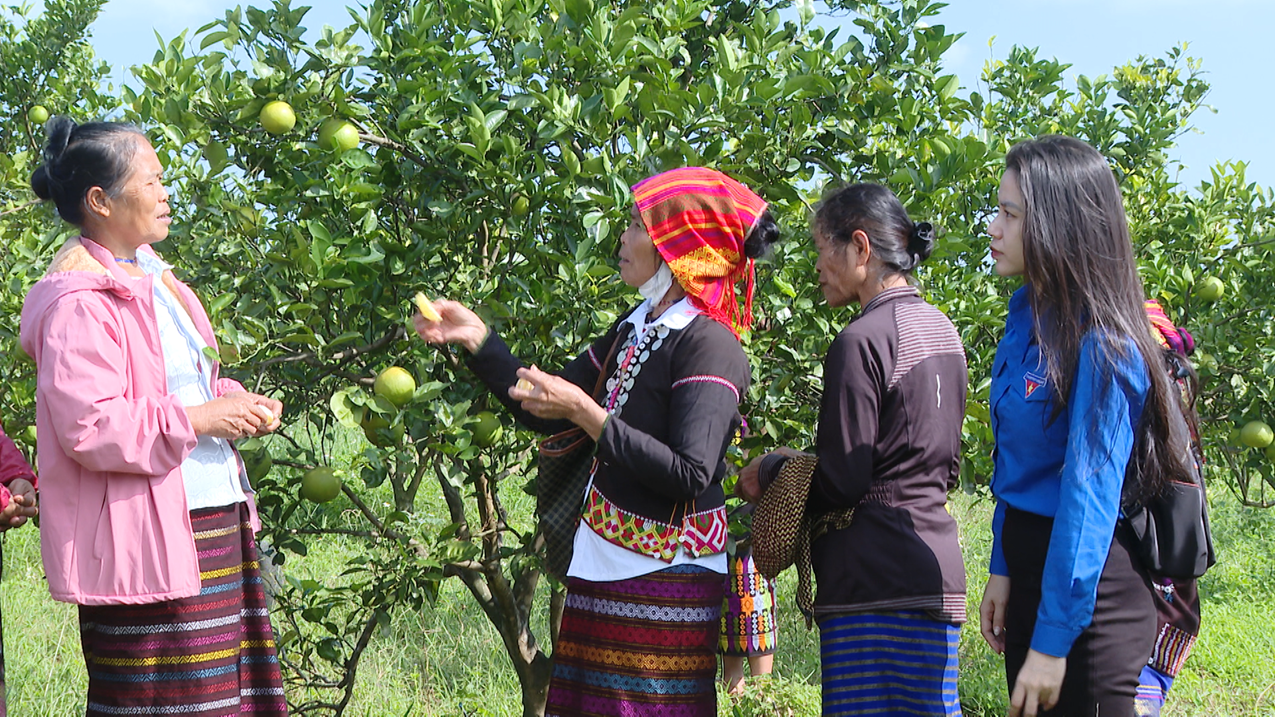
More importantly, the cooperative has inspired ethnic minority farmers to adopt organic coffee production. Membership has grown from 12 to 115 people. Ms. Ho Thi Thanh, a cooperative member, shared that through training and guidance—from cultivation to harvesting—coffee quality has improved, leading to higher productivity and income for her family.
Digital Transformation – A Key Lever
In reality, connecting OCOP products from mountainous areas to markets still faces many challenges: Unstable markets; Limited promotion capacity; Uneven adoption of digital technology
To address these issues, provincial authorities have actively supported OCOP stakeholders in: Branding and trademark registration; Trade promotion and Digital transformation. Numerous training courses on online sales and e-commerce platforms have been organized, helping people gradually adapt to modern business methods.
Mountainous residents adopt organic agriculture models – Photo by M.H.
Currently, the province has: 160 OCOP products. In which, there are 2 products rated 5 stars, 31 products rated 4 stars. The Provincial Cooperative Alliance has implemented many practical initiatives, especially in digital transformation.
Mr. Nguyen Van Chien, Vice Chairman, stated: “We have focused on digital transformation training. In 2025, we organized 21 training courses and coordinated 11 additional sessions to guide cooperatives in applying technology for product promotion and consumption. We also support listing products on e-commerce platforms and connecting them with businesses to expand markets, especially in mountainous areas.”
The Department of Science and Technology has also supported cooperatives in: Brand development, Preservation technology and Product promotion. Typical models include processing and packaging for Khe Sanh coffee, A Ho bamboo shoots, and medicinal herbs—helping improve quality, extend shelf life, and expand market reach.
Mr. Dao Ngoc Hoang, Deputy Director, emphasized: “We support cooperatives in applying scientific and technological advances in processing and preservation, contributing to improved quality and added value. This is a crucial foundation for OCOP products to meet market requirements.”
From improved awareness to strong institutional support, cooperatives and cooperative groups in mountainous Quảng Trị are steadily affirming the right direction in developing OCOP products. When products are systematically invested, branded, and effectively connected to markets, their value increases—bringing stable income and better livelihoods for local people.
 IPA
IPA