Farmers “Transforming” in the digital economy
- Wednesday - 15/04/2026 23:59
- Close page
As livestream sessions appear in rural villages and agricultural products are labeled with QR codes and sold on digital platforms, a new generation of farmers is emerging. Beyond producing high-quality goods, they now know how to sell, tell product stories, and compete in the digital space.
Going online to sell products
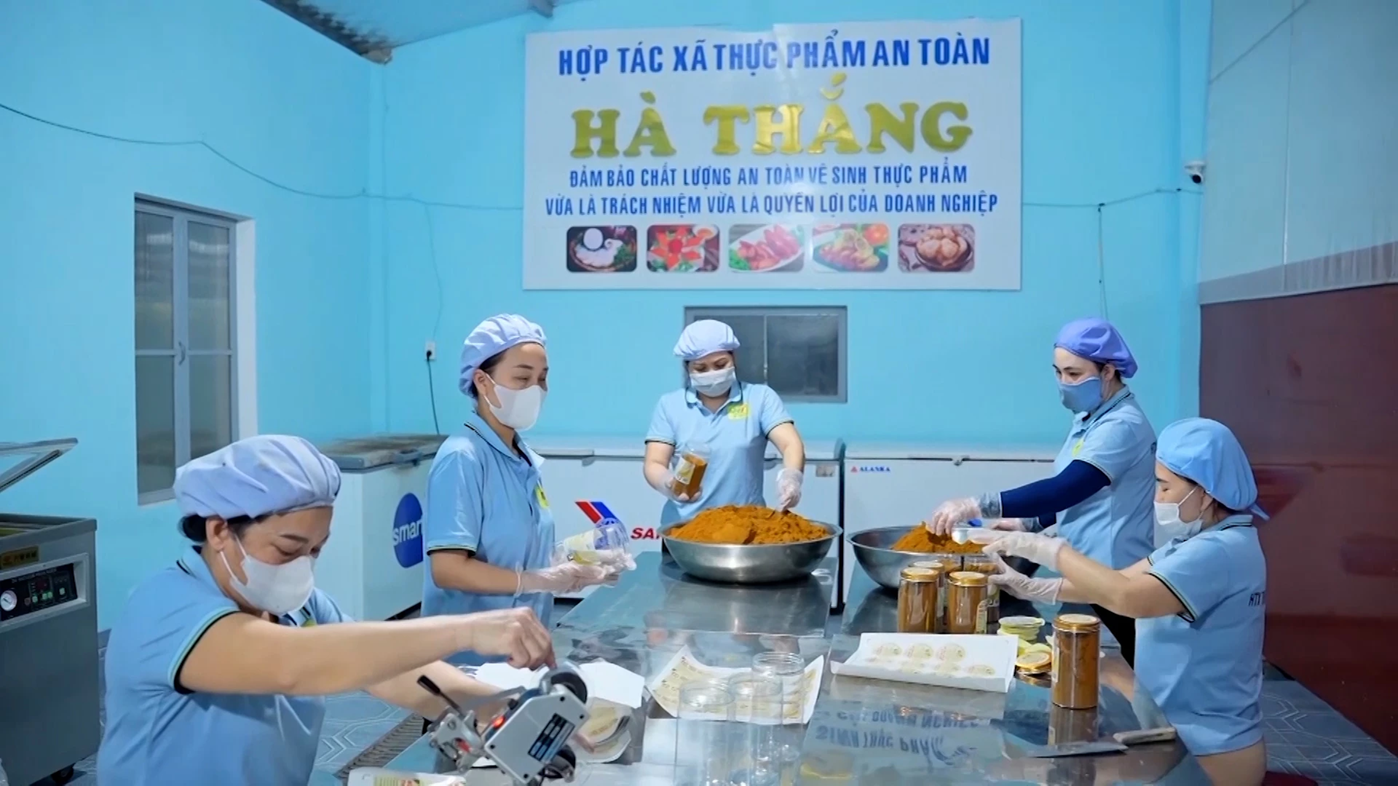
For the past seven years, Ms. Ngo Thi Ha, Director of Ha Thang Safe Food Production and Business Cooperative (Truong Ninh Commune), has spent time almost every day selling products online. Using a smartphone, she regularly posts content, takes photos, records videos, and livestreams on Zalo and Facebook to introduce the cooperative’s OCOP 3-star sausages and pork rolls. At first, online selling was not easy for her.
Coming from a production background, she felt shy speaking in front of a phone and introducing products. However, step by step, she learned how to film videos, interact with customers, reply to messages, and close sales.
“At the beginning, I was quite shy and not used to speaking on camera. But over time, I got used to it. Some days after livestreaming, I could sell products, which made me happy and motivated me to continue,” she shared.
Currently, most of the cooperative’s products are sold online, in addition to regular local customers. On average, the cooperative sells about 40 kg of products per day—a modest but stable figure, especially in a competitive market.
According to Ms. Ha, online selling helps products reach more customers, especially those who cannot buy directly.
“Customers far away can watch livestreams to understand the production process and product quality before placing orders. Online selling is clearly more effective and proactive,” she said.
In 2025, bringing agricultural products into the digital environment is no longer unfamiliar. According to the Provincial Farmers’ Association, 100% of OCOP producers now have digital accounts, and nearly 6,300 farmers participate in e-commerce platforms. This reflects a shift from passive selling to actively seeking markets. Livestream sessions, once unfamiliar, have become practical learning tools for farmers.
The Association has also organized forums on online selling, attracting hundreds of participants and creating opportunities for farmers to exchange and learn from one another. When farmers know how to sell online, they better understand the value of their products.
Technology reaching every field
Coming from a production background, she felt shy speaking in front of a phone and introducing products. However, step by step, she learned how to film videos, interact with customers, reply to messages, and close sales.
“At the beginning, I was quite shy and not used to speaking on camera. But over time, I got used to it. Some days after livestreaming, I could sell products, which made me happy and motivated me to continue,” she shared.
Currently, most of the cooperative’s products are sold online, in addition to regular local customers. On average, the cooperative sells about 40 kg of products per day—a modest but stable figure, especially in a competitive market.
According to Ms. Ha, online selling helps products reach more customers, especially those who cannot buy directly.
“Customers far away can watch livestreams to understand the production process and product quality before placing orders. Online selling is clearly more effective and proactive,” she said.
Since joining digital platforms, the cooperative’s products have reached a wider range of customers – Photo: D.H
From an experimental sales channel, social media has now become a familiar “marketplace” for many farmers and small producers in the province. Online selling not only helps with product consumption but also forces producers to improve packaging, preservation, and storytelling to build trust with consumers.In 2025, bringing agricultural products into the digital environment is no longer unfamiliar. According to the Provincial Farmers’ Association, 100% of OCOP producers now have digital accounts, and nearly 6,300 farmers participate in e-commerce platforms. This reflects a shift from passive selling to actively seeking markets. Livestream sessions, once unfamiliar, have become practical learning tools for farmers.
The Association has also organized forums on online selling, attracting hundreds of participants and creating opportunities for farmers to exchange and learn from one another. When farmers know how to sell online, they better understand the value of their products.
Technology reaching every field
Recognized as “Scientist of the Farmers” in 2025, Mr. Nguyen Dang Vuong, Director of Tay Son Clean Agriculture Cooperative (Vinh Linh Commune), not only focuses on clean farming but also on branding and market connection.
He previously won a prize at the 10th National Farmers’ Technical Innovation Contest in 2024 for his solution of utilizing agricultural by-products to produce animal feed and organic microbial fertilizers.
Mr. Vuong actively applies digital platforms to promote products, ensure transparency in production processes, and connect directly with consumers. His videos and livestreams showcasing farming and livestock care processes are regularly maintained, helping build trust and expand markets.
Thanks to this approach, Tay Son Cooperative has maintained stable product consumption and become a learning model for other farmers.
His story shows that digital transformation in agriculture is no longer limited to sales but has extended deeply into production. If it only focuses on output, it cannot create sustainable change. From simple “digital shops,” a market-oriented mindset is gradually forming right in the fields.
In 2025, the Provincial Farmers’ Association organized training and technology transfer programs for nearly 62,400 participants. Concepts such as traceability, organic farming, and circular agriculture are becoming more familiar.
Most importantly, the change lies not in technology but in the role of farmers. Previously, farmers mainly relied on traditional markets and traders, but now selling on digital platforms is becoming increasingly common.
Despite infrastructure limitations in rural areas, nearly 74,900 farmers in the province have installed the Vietnam Farmers App. Not everyone is familiar with smartphones or online selling, but they understand that without change, they risk being left behind.
Avoiding being left behind
He previously won a prize at the 10th National Farmers’ Technical Innovation Contest in 2024 for his solution of utilizing agricultural by-products to produce animal feed and organic microbial fertilizers.
Mr. Vuong actively applies digital platforms to promote products, ensure transparency in production processes, and connect directly with consumers. His videos and livestreams showcasing farming and livestock care processes are regularly maintained, helping build trust and expand markets.
Thanks to this approach, Tay Son Cooperative has maintained stable product consumption and become a learning model for other farmers.
His story shows that digital transformation in agriculture is no longer limited to sales but has extended deeply into production. If it only focuses on output, it cannot create sustainable change. From simple “digital shops,” a market-oriented mindset is gradually forming right in the fields.
In 2025, the Provincial Farmers’ Association organized training and technology transfer programs for nearly 62,400 participants. Concepts such as traceability, organic farming, and circular agriculture are becoming more familiar.
Most importantly, the change lies not in technology but in the role of farmers. Previously, farmers mainly relied on traditional markets and traders, but now selling on digital platforms is becoming increasingly common.
Despite infrastructure limitations in rural areas, nearly 74,900 farmers in the province have installed the Vietnam Farmers App. Not everyone is familiar with smartphones or online selling, but they understand that without change, they risk being left behind.
Avoiding being left behind
Many successful farmers who actively apply technology have shown that modern agriculture cannot be separated from the market. However, the transformation remains uneven.
In some areas, production is still small-scale, technology adoption is limited, and market access depends on intermediaries. Not all farmers can easily enter the digital space.
Barriers lie not only in equipment or infrastructure but also in traditional habits and hesitation to change. For many households, using smartphones for business and promotion is still new.
Mr. Truong Quang An, Chairman of the Farmers’ Association of Dong Trach Commune, said that only about 10–15% of members engaged in production and business participate in digital platforms, mainly seafood traders.
“Most still operate on a small scale, using personal Facebook pages for promotion, which has shown initial effectiveness. However, market expansion remains limited, and many producers operate at a modest level. Partly due to limited technological skills, especially among older members,” he noted.
This reality shows that digital transformation in agriculture is not just about technology but a comprehensive shift in awareness, skills, and production organization. Without addressing these bottlenecks, disparities among farmers will remain, and the transition to the digital economy cannot happen overnight.
However, through this process, a new generation of farmers is gradually emerging—more proactive, flexible, and ready to adapt to the market. From small changes in each field and each digital storefront, farmers are reinventing themselves to avoid being left behind and to become key players in the rural economy in the digital age.
In some areas, production is still small-scale, technology adoption is limited, and market access depends on intermediaries. Not all farmers can easily enter the digital space.
Barriers lie not only in equipment or infrastructure but also in traditional habits and hesitation to change. For many households, using smartphones for business and promotion is still new.
Mr. Truong Quang An, Chairman of the Farmers’ Association of Dong Trach Commune, said that only about 10–15% of members engaged in production and business participate in digital platforms, mainly seafood traders.
“Most still operate on a small scale, using personal Facebook pages for promotion, which has shown initial effectiveness. However, market expansion remains limited, and many producers operate at a modest level. Partly due to limited technological skills, especially among older members,” he noted.
This reality shows that digital transformation in agriculture is not just about technology but a comprehensive shift in awareness, skills, and production organization. Without addressing these bottlenecks, disparities among farmers will remain, and the transition to the digital economy cannot happen overnight.
However, through this process, a new generation of farmers is gradually emerging—more proactive, flexible, and ready to adapt to the market. From small changes in each field and each digital storefront, farmers are reinventing themselves to avoid being left behind and to become key players in the rural economy in the digital age.