COASTAL TOURISM AT THE THRESHOLD OF TRANSFORMATION
- Monday - 23/03/2026 22:41
- Close page
A “Backdrop” for Tourism
For many years, coastal tourism in Central Vietnam, including Quảng Trị, has often been identified with beautiful beaches, short peak seasons tied to summer sunshine, and waves of leisure travelers. As a result, the sea has often been viewed primarily as a natural resource to be exploited rather than as a strategic component of long-term development.
However, new orientations in Vietnam’s national tourism development strategy indicate a fundamental shift. The sea is no longer simply a place of scenic beauty; it is becoming a connecting axis of economic, cultural, ecological, and integration flows. Coastal tourism is no longer just about relaxation, but rather a combination of experiences, identity, and sustainable values.
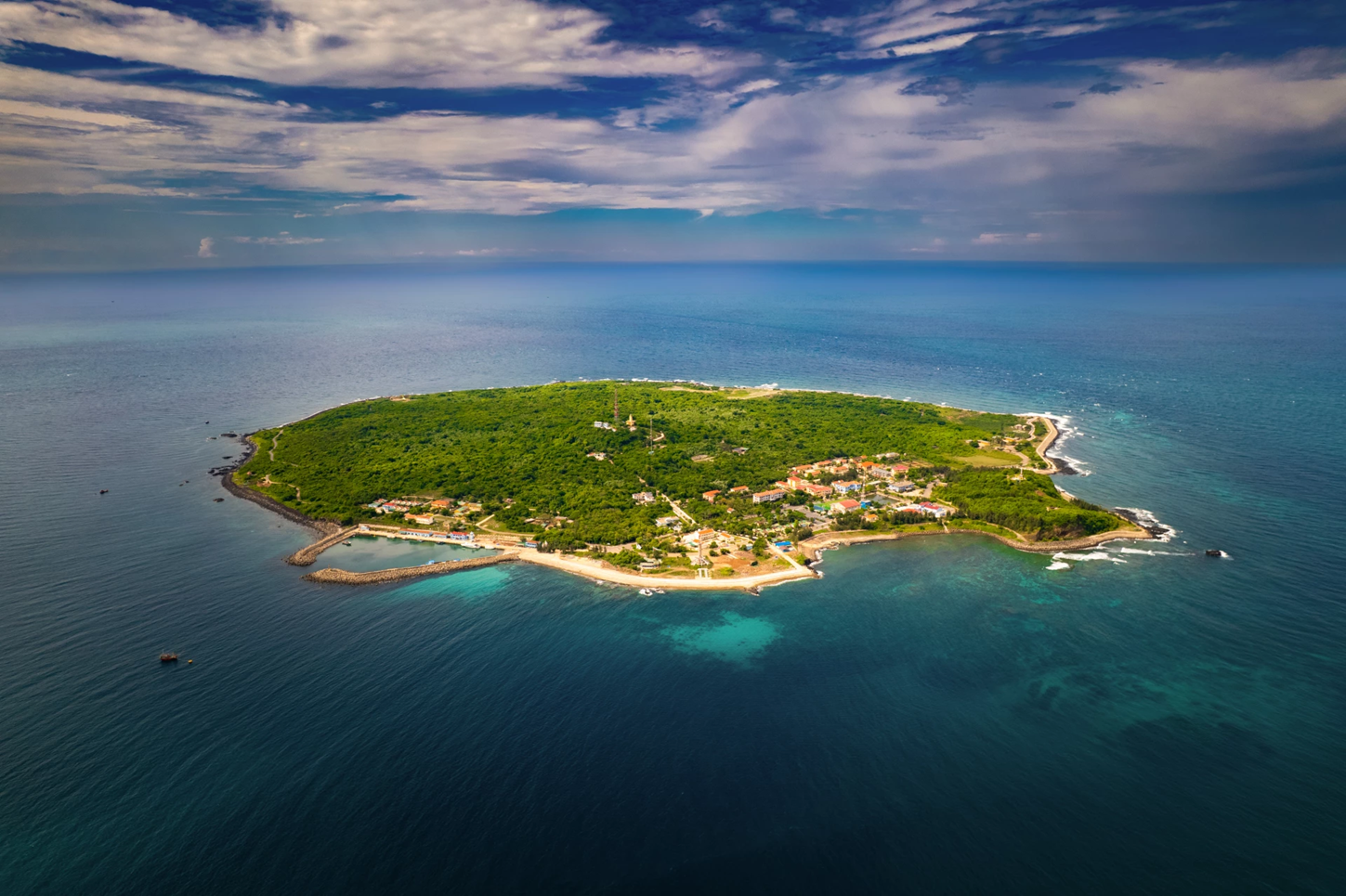
One of the most impressive destinations of Quảng Trị’s coastal tourism is Cồn Cỏ.
Coastal tourism has long been identified as one of the key drivers of Vietnam’s tourism industry. The Tourism System Master Plan for the period 2021–2030, with a vision to 2045, emphasizes the development of internationally competitive coastal tourism centers associated with resource protection and climate change adaptation.
This approach reflects a clear transition—from simply exploiting marine resources to developing sustainable coastal tourism, viewing the sea as an integrated space of multiple values: leisure, experience, culture, history, ecology, memory, and identity. The sea is no longer merely a “background” for resorts but the core of the development narrative.
Nevertheless, year-round coastal tourism remains an aspiration for Central Vietnam in general and Quảng Trị in particular. One long-standing limitation of coastal tourism in the region is seasonality. Beaches are vibrant during summer but remain quiet for many months due to weather conditions and storms.
What does Quảng Trị’s sea offer?
After administrative restructuring, Quảng Trị now possesses a continuous, diverse, and highly potential coastal space with nearly 200 kilometers of coastline, stretching from Nhật Lệ, Bảo Ninh, Quang Phú, Đá Nhảy to Cửa Tùng, Cửa Việt, and Mỹ Thủy. Each beach has its own character—from pristine and tranquil to vibrant and capable of hosting large-scale tourism activities.
The coastal space of this land of “hot Lao winds and white sand” is closely connected with a rich system of natural and cultural–historical heritage, including Phong Nha – Kẻ Bàng National Park, Quảng Trị Citadel, Vịnh Mốc Tunnels, and the historical site of Hiền Lương – Bến Hải River, along with hundreds of monuments, festivals, and traditional coastal craft villages.
This intersection of the sea, heritage, and historical memory creates a unique tourism structure that is difficult to replicate elsewhere. The sea directly connects with natural and cultural heritage systems, forming seamless journeys that combine relaxation, exploration, and historical reflection.
Nguyễn Đức Chung, a visitor from Phú Thọ Province, shared: “What I find different in Quảng Trị is that the distance between the sea and historical sites is very short. You can swim in the morning and visit Phong Nha Cave in the afternoon, or from Cua Tung Beach travel to Quảng Trị Citadel or the Vịnh Mốc Tunnels. The trip feels more connected and meaningful.” This interaction allows coastal tourism to go beyond being a seasonal product and instead become an experiential axis linked to heritage, history, and identity—elements that create lasting appeal for the region.
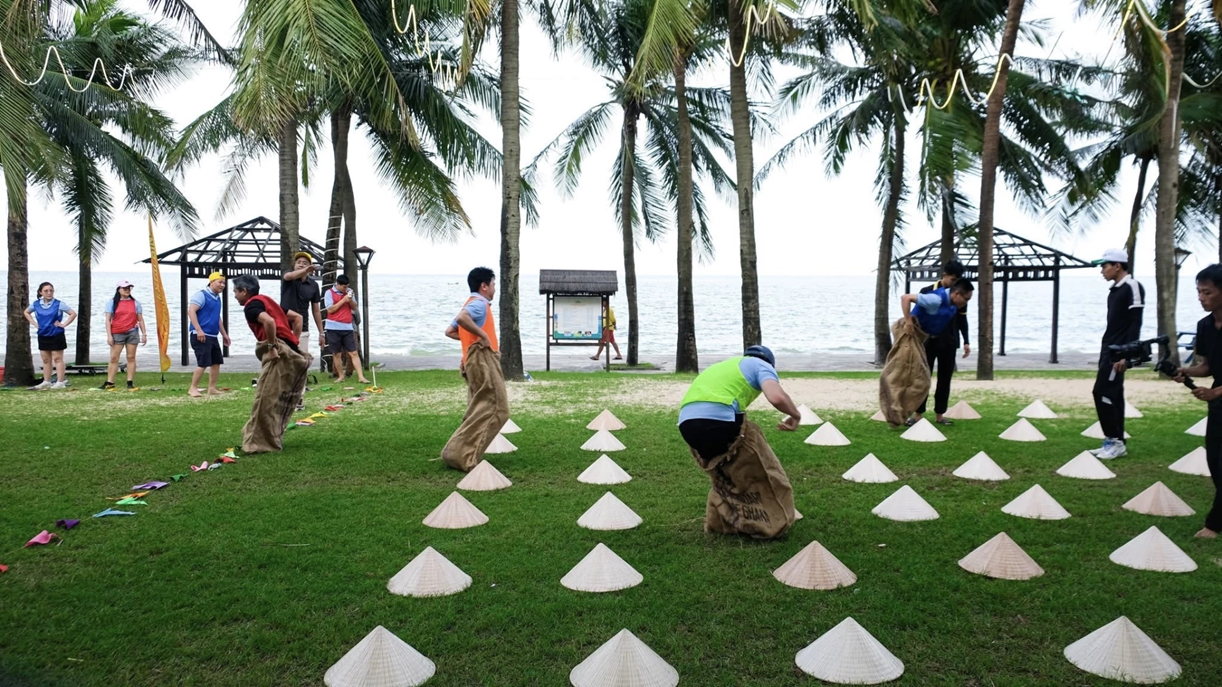
Visitors participate in a teambuilding activity on Bảo Ninh Beach
Quảng Trị Province is currently integrating tourism planning into the provincial master plan for the 2021–2030 period, with a vision to 2050, identifying key development poles such as Phong Nha – Kẻ Bàng National Park and the coastal tourism cluster of Cửa Việt – Cửa Tùng – Cồn Cỏ, aiming to develop them into potential national tourism zones. Strategic transport projects such as the Vạn Ninh – Cam Lộ Expressway, the coastal road network, the expansion of Đồng Hới Airport, and the construction of Quảng Trị Airport are gradually taking shape, creating favorable conditions to connect the coastal tourism space with inland areas and international markets. Meanwhile, the accommodation system has developed rapidly with around 780 establishments and nearly 12,000 rooms, including a growing number of high-end coastal hotels and resorts.
Earlier, in October 2022, the luxury cruise ship Le Lapérouse operated by the French cruise line Ponant brought nearly 100 international visitors from countries such as the United States, France, Germany, Canada, Belgium, and Switzerland to Hòn La Port. This marked the first time the former Quảng Bình Province welcomed a high-end cruise ship, opening up new opportunities for maritime tourism. If given adequate investment, this tourism segment is expected to become a promising development direction, helping to reduce the seasonality that has long characterized the local tourism industry.
Awaiting the Day to “Reach the Open Sea”
Sustainable coastal tourism development cannot be separated from coastal communities. Fishing villages, whale worship festivals, and indigenous maritime knowledge represent “living cultural capital” that no resort complex could replicate. Therefore, coastal tourism requires a more humane approach—one in which local people are not merely service providers but the true stewards of the coastal space, benefiting from tourism while sharing responsibility for protecting the sea.
Quảng Trị is rich not only in natural resources but also in cultural resources, particularly in coastal areas. Developing models such as community-based tourism, fishing village experiences, local seafood gastronomy, marine museums, and coastal cultural centers offers promising directions for strengthening and expanding coastal tourism. However, this does not mean rapid or uncontrolled development. Instead, the province aims to move slower but more steadily, ensuring that each project and tourism product contributes to shaping the long-term identity of Quảng Trị’s coastal tourism.
The evolution of tourism trends also requires expanding development approaches: year-round coastal tourism combined with coastal cultural and historical tourism, fishing village community tourism, wellness tourism, MICE tourism, marine sports, cruise tourism, ecological experiences, and marine environmental education. From the perspective of tourism enterprises, “reaching the open sea” is not merely about launching more projects or extending the exploited coastline.
The sea cannot be planned in a fragmented way through isolated projects; instead, it must be viewed as an integrated spatial entity, where transportation infrastructure, coastal urban areas, tourism zones, cruise ports, and public spaces are harmoniously connected.